
 English
Made in Italy exceeded estimates (+19%)
The fashion industry closed the beginning of the year exceeding expectations. «Another double-digit increase is expected in the second quarter, but it will be affected by the conflict in Ukraine», Cirillo Marcolin of Confindustria Moda stated. Exports nearing pre-Covid levels again (-0.8%)

Made in Italy has started to grow again. The figures for the textile, fashion and accessory industry in 2021 and the first quarter of 2022 exceeded expectations, although in the coming months some uncertainties on the horizon could slow down the recovery of most companies in the sector. According to data by the Confindustria Moda Centro Studi, the beginning of the year closed with a 19.3% increase in turnover, a result exceeding the initially expected +14%, and the trend in orders recorded a very positive growth as well, with a 15% increase over the same period in 2021.
Moreover, the average annual recovery for the industry is now estimated in the range of +22.2%, slightly improved compared to last December's outlook of +20.6%. Considering that in 2020 the textile, fashion and accessory industry’s turnover had increased to about 75 billion euros and the 2021 trend recorded an increase of about 16.7 billion euros, total sales raised to 91.7 billion euros. This is a significant recovery, although still partial, since the gap with 2019 levels is still in the range of -6.4%, equal to a 6.3 billion euros gap in absolute value. «These figures show that the recovery process has not been without difficulties, particularly for SMEs, certainly more flexible but also more exposed to market risks», Gianfranco di Natale, General Director for Institutional Affairs of Confindustria Moda, explained during the press conference to present the results.
Macro risks that are still before everyone's eyes. Starting with the effects related to the Russian-Ukrainian conflict which are partly impacting on exports, but more heavily on rising energy and raw material costs, as well as complicating the provision of supplies. In this scenario, all the seven associations gathered by the federation have been affected. «For example, the increase in precious and non-precious metal prices has been impacting eyewear and goldsmithing, the increase in packaging costs has been reported primarily by textiles-clothing, footwear and leather goods industries, while the increase in hides and skins has been affecting footwear, tanning, fur and leather goods sectors», di Natale continued. «In addition, increases in chemicals, textiles, and components have been affecting all realities in general». Uncertainties on the international scenario are also the main factor behind the expected slowdown in the second quarter, although an average increase in sales in the range of 12.9% is estimated.
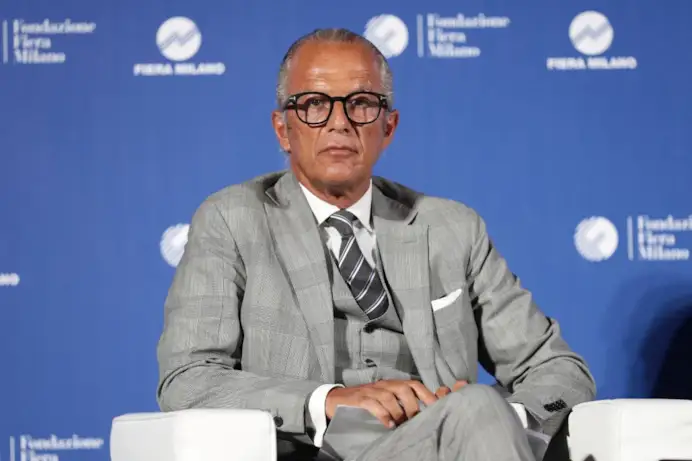
«In general, our businesses have shown great resilience. The forecast for the next three months is still for double-digit growth, albeit more subdued. We know there is a series of challenges ahead that will have to be faced», President Cirillo Marcolin also commented. Beginning with the collapse of exports to the conflict-affected areas of Eastern Europe. «Exports to Russia and Ukraine were worth 1.72 billion euros last year, up by 16.9% on 2020 but still down by 3.1% on 2019, with 1.46 billion euros generated in Russia and 260 million euros generated in Ukraine», the President continued. «Together they represented the tenth largest outlet market, with a 2.5% share of total exports. A negligible value at the system level, but very relevant for certain sectors such as footwear in the Marche area, for example, which is now particularly exposed». However, Marcolin pointed to the fact that Confindustria Moda continues to support the government on the Russia sanctions front. «Although they cause a number of inconveniences for member companies, we believe they can facilitate the path to peace, which at the moment is the most important thing since the human aspect prevails over everything else. Moreover, even in the medium term, we think these measures can yield positive results in economic terms», he explained.
Meanwhile, in the period between January and December 2021, the fashion industry recorded exports of more than 67.5 billion euros (+23.5% on 2020), approaching the pre-pandemic 68 billion euros (-0.8% on 2019). On the podium of importing countries, there is once again Switzerland, which, although down by 8% compared to 2019 levels, generated 8.58 billion euros (+20.1% annually). It is followed by France, with purchases of made-in-Italy products amounting to 7.71 billion euros (+26.2%), and the US with 6.58 billion euros (+44.8%). Fourth position for Germany, which imported Italian goods for almost 5.4 billion euros (+14.9%) last year. China recorded a remarkable increase of 42.6% with 3.44 billion euros, while the UK (-10.2%) showed a sharp deterioration, confirming the negative situation emerging on the inflationary front. Textile-clothing exports (48%) dominated the market, followed by footwear (15.2%), leather goods (14.2%), goldsmithing and jewelry (11.9%), eyewear (5.9%), tanning (4.4%) and finally fur (0.3%).
«Textiles, fashion and accessories are regaining their role as drivers of the country's economy and some of the main contributors to the Italian trade balance, as it was before the pandemic», President Marcolin stated. «We still do not have precise estimates for 2023, but internationalization, sustainability and digitalization certainly are key issues for the development of our industries. Only by growing and building synergies between the resources of our seven associations will we be able to invest, so that the SMEs that make up the fabric of made-in-Italy production do not lose ground to competitors outside Europe».
The problems affecting the sector cut across the country's system and require structural interventions, such as a reform of the energy market and cap costs for businesses, which, the President remarked, Confindustria Moda has been demanding from the government for several years. «The current situation requires reshoring, and I believe it is crucial for the government to incentivize Italian companies to bring their production activities back to Italy», he concluded. «In order to do this, a more efficient supply chain is needed to both allow costs to be cut and concretely accelerate on sustainability, sharply cutting carbon dioxide emissions by reducing travel for the transport of raw materials and products». (all rights reserved)


Altre notizie


The fashion industry makes a plea to the Ministry of enterprises


