
 English
Glenn Martens: «Sustainability is the future»
The designer tells MFF about his eco projects, from the launch of the Evergreen collection with Y/Project to the couture debut for Jean Paul Gaultier with two recycled looks and to the new sustainable denim jeans by Diesel, which will be unveiled on the Milan’s runway
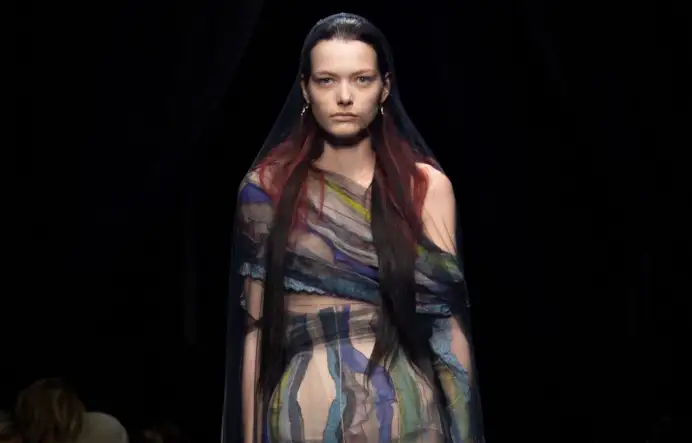
Sustainability has always been a key element of Glenn Martens' work. Since his arrival at Y/Project in 2014, the focus on green has been the core of a process in which deconstruction and eclecticism have distinguished the collections shaping a contemporary and extremely creative vision. Under his leadership, the Paris-based brand has combined conceptual and inventive details with playful proportions and a current take on historical and costume references. A two-time Andam grand prize winner and now creative director at Diesel for the past two seasons, Martens has created a fascinating narrative not only for his brand, but also for the new direction of Otb group's flagship label. Finally, his couture debut for Jean Paul Gaultier was press acclaimed (see MFF, January 27), closely followed by his appointment as president of the jury at the 2022 Hyères festival (see MFF, February 1). By consolidating his position in the luxury market and a very distinguished identity, Martens’ mission is an increasingly sustainable development, which is why from SS 2021 he introduced iconic and eco-friendly Evergreen garments, while continuing his collaboration with Melissa. After two successful drops of recyclable plastic shoes, a third one is planned for June. Glenn Martens himself spoke about all his new projects in this interview with MFF.
What is Evergreen’s concept?
The project was actually born during the Covid-19 period, but I had been planning to invest in a more responsible path for quite some time. The first time I dealt with these issues was ten years ago together with Bruno Pieters, at the time of Honest by, the first label that communicated where garments were produced, with what materials and by which manufacturers. Back then, the ethos of the brand was cutting edge, too much, since nobody was interested in sustainable practices and we wondered if such transparency could be applied on an international scale when making design products. As for Y/Project, this was applied only two years ago with Evergreen, which we launched for different reasons, mostly because I believe in sustainability and the fact that garments should last. They are garments which can be worn every day, but with an added twist.
What is the recipe for a successful sustainable product?
Saying yes to respect for the environment, but to desirability as well. Each Evergreen garment is reinterpreted to be produced in the most ethical and sustainable way possible, including taking responsibility for carbon emissions with our certified manufacturing, packaging, shipping, materials and seals. The Evergreen selection will be enhanced each season with new models that will become classics of our style. We believe in a basic wardrobe that can be updated every year and never go out of fashion. These are garments designed to last long, whose raw materials are selected according to their contribution to preservation of biological diversity and traced. We live in a world that literally consumes fashion and design at an inhuman speed, also because of social media we no longer take the time to stop, everything lasts a moment, we are only on Instagram and fast fashion keeps dominating. It is not easy to get back into this cycle, but it is about having respect for nature, craftsmanship, finding the beauty in something that must be respected, precisely because it has its own time. It cannot be too fast or ephemeral, it requires care.
What is your approach to sustainability for Diesel?
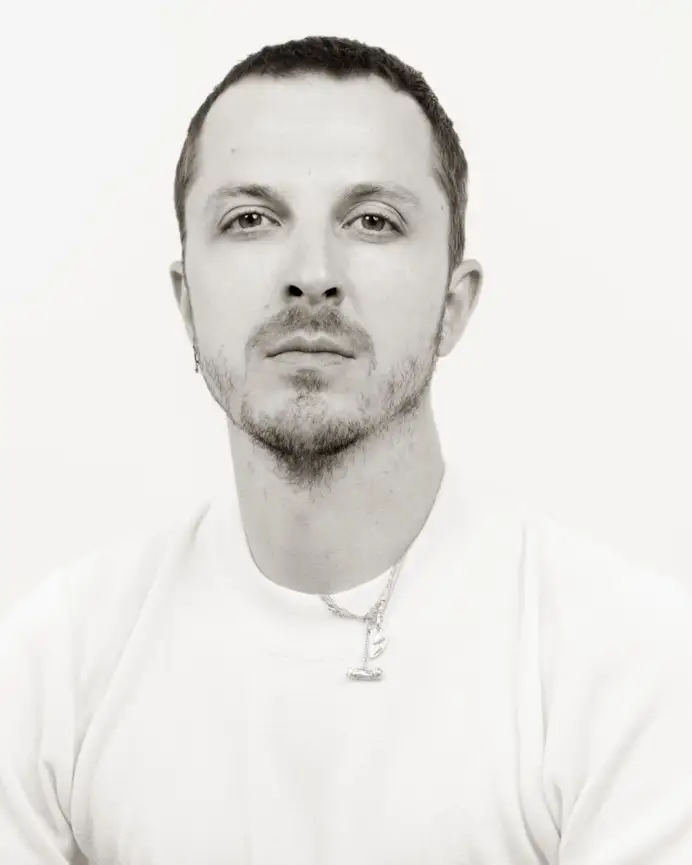
I launched Diesel library, which is a concept of responsible key pieces. These are iconic denim pieces that are transversal and that everyone can wear. I think it is fundamental that brands with a specific weight like Diesel, with a wide, international and transversal audience, who can be sensitized, undertake an eco-friendly path. We do not like a brand because it is sustainable, but because of what it produces, because of the design it has. That was one of the reasons I decided to work in an international brand like this one, because I knew I could make a difference and get messages across through creativity. We are currently in the process of launching the first sustainable denim jeans, which will be presented on February 23, during Fashion week, and will be on sale starting in November.
Your recent collection for Jean Paul Gaultier was a great success. Was there also a responsible approach? How can couture be more sustainable?
I used recycled and dead stock fabrics for two looks and it was quite a challenge. Couture can be sustainable because you only make a garment to order in the atelier, which is a work of art. In haute couture, the artistic side takes over, with a low impact on the environment compared to the rest of a brand's production.
In February, you will be physically walking the runway for the first time for Diesel. Are you happy?
I am very happy, also because I will be able to discover Milan, a new city for me after Paris. I believe that I have invented a unique language and that no one considers me an enemy or a competitor. And with Diesel it is the same thing because we do not have the pressure of having to be compared with someone else, the segment where we are positioned is only ours.
Can you tell us about the co-lab with Melissa's vegan footwear?
The co-lab between Y/Project and Melissa was only supposed to last a season, instead we are currently continuing to collaborate. We just launched a new drop of mules and should have a third one coming out in June. I love working with brands that have the opportunity to create something that I cannot develop, as is the case with footwear. With Melissa it was the first co-lab with which I could really indulge. The inspiration comes from the Belgian city of Bruges where I grew up, a historically interesting country, and the crystal slippers in recyclable plastic are like the city, with a unique shape: a romantic fairy tale dream. Plus, there is the rococo flavour of the heel, which recalls the footwear of eighteenth-century porcelain figurines, combined with textures that trace the patterns of Victorian vases.
What is your wish for the future of fashion?
The future of everything should be sustainability. We live in a world devoted to capitalism, but we need to start making a difference for responsible consumption, in order to have a future. (All rights reserved)


Altre notizie


The fashion industry makes a plea to the Ministry of enterprises


